
Best Used Commercial Coffee Machines [BUYER GUIDE]
Note: This page contains affiliate links.
As an Amazon Associate, I earn from qualifying purchases when you click on the link, but you are not charged extra.
Coffee is more than just a beverage; it is an experience, a ritual, and for many businesses, a cornerstone of customer satisfaction. Whether you run a bustling café, a hotel, an office space, or a specialty coffee shop, having the right coffee machine can make a world of difference. Commercial coffee machines, designed to handle high volumes and deliver consistent quality, are a crucial investment. However, for many businesses, purchasing a brand-new machine can be prohibitively expensive. This is where used commercial coffee machines come into play. They offer an affordable, practical, and often surprisingly reliable solution for businesses aiming to provide premium coffee without breaking the bank. In this guide, we explore the advantages of used commercial coffee machines, how to select the right one, and strategies to maintain and maximize their performance.
Top 5 Must-Try Coffee Lineup
- Old World Christmas Beans: Tastes like the holidays in every cup — discover the cozy magic of Old World Christmas Beans before the season slips away.
- Kirkland Sumatra French Roast : Dark, bold, and wildly smooth—why Kirkland’s Sumatra French Roast is the best-kept secret of serious coffee drinkers.
- Hot Fudge Whole Bean Coffee : What happens when dessert meets coffee? Meet the decadent whole bean that tastes like hot fudge—but better.
- Aroma Ridge Guatemala Antigua Medium Roast : From the highlands of Guatemala to your morning mug—this rich, balanced roast is waking up coffee lovers everywhere.
- Juan Valdez Cumbre Colombian Coffee : Crafted by Colombia’s most iconic coffee legend—why Cumbre is a must-try for fans of bold, authentic flavor.
Contents
- 1 Best Used Commercial Coffee Machines: Comparison Table
- 2 Best Used Commercial Coffee Machines
- 3 Why Buy Used Commercial Coffee Machines
- 4 How To Choose The Right Machine?
- 5 Top Features To Look For In Used Commercial Coffee Machines
- 6 Tips For Using Used Commercial Coffee Machines
- 7 Maintenance And Cleaning Tips
- 8 Where To Buy Used Commercial Coffee Machines
- 9 Final Words
Best Used Commercial Coffee Machines: Comparison Table
| Features | Pros | Cons | |
|---|---|---|---|
Nuova Simonelli Appia II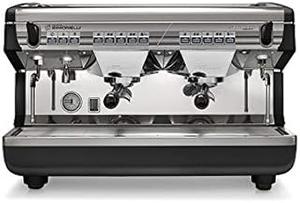 Check Price Check Price |
|
|
|
| La Marzocco Linea ClassicCheck Price |
|
|
|
| Rancilio Classe 9Check Price |
|
|
|
| Sanremo Café RacerCheck Price |
|
|
|
| Astoria Plus 4 YouCheck Price |
|
|
|
Best Used Commercial Coffee Machines
Nuova Simonelli Appia II
The Nuova Simonelli Appia II is one of those workhorses that doesn’t need much fuss. It’s compact enough to fit in smaller spaces but still packs a punch for consistent espresso shots. The electronic keypad and automatic dosage features make it easy to use, even in a fast-paced environment. It’s perfect for small to mid-sized coffee shops where reliability matters. However, it lacks some of the fancy features of pricier models like touchscreens or super advanced temperature controls, but for the price, it’s a solid deal.
Features:
- Two or three group options
- Compact design
- Electronic keypad
- Automatic dosage
- Energy-efficient boiler
Pros:
- Compact, fits in tight spaces
- Highly reliable
- Good value for the price
- Intuitive controls
Cons:
- Limited steam power for large volumes
- Some models lack advanced features
- Not as high-tech as others on the market
La Marzocco Linea Classic
If you’re looking for a used machine that’s built to last, the La Marzocco Linea Classic is an absolute legend. This one’s a favorite among coffee shops because it’s sturdy, reliable, and makes an excellent espresso shot. The dual boilers allow you to brew and steam at the same time, which is a big plus during busy periods. The PID control gives you precise temperature adjustments, so you can get exactly the right taste every time. It’s a bit of an investment, and it needs regular upkeep, but if you’re in it for the long haul, this machine will serve you well.
Features:
- Dual boiler system
- PID temperature control
- Stainless steel construction
- Manual espresso lever operation
- Pre-infusion technology
Pros:
- Exceptional build quality
- Consistent espresso shot quality
- Highly customizable for a range of brewing preferences
- Durable and reliable in high-volume settings
Cons:
- High initial cost (even used)
- Requires regular maintenance
- Takes up a fair amount of counter space
Rancilio Classe 9
The Rancilio Classe 9 is a sleek, modern machine that stands out with its touchscreen interface, which makes operation super smooth and intuitive. It’s a solid choice for shops that need a reliable espresso machine that also saves energy. The temperature stability is top-notch, so you’re always brewing with consistency. However, it can be a little intimidating for those not familiar with commercial espresso machines, and because of the advanced features, repairs can get pricey if something breaks. Overall, it’s a powerful option for medium-sized coffee shops that want the perfect shot every time.
Features:
- Touchscreen interface
- Advanced temperature stability
- Two groups
- Energy-saving mode
- Easy to clean components
Pros:
- User-friendly touchscreen
- Efficient energy use
- Advanced features for precise brewing
- Great for mid-to-high volume environments
Cons:
- Can be complicated to repair if something goes wrong
- A bit bulky
- Not the most affordable used option
Sanremo Café Racer
If you’re looking for a machine that combines both aesthetics and performance, the Sanremo Café Racer is a showstopper. Its dual boiler system and touchscreen interface make it perfect for both precision and speed in a high-volume setting. You can also program your preferred brewing settings for consistency throughout the day. The design is definitely on the larger side, so make sure you have the space, and while it’s fantastic to use, it can be a bit tricky to maintain without a good service plan in place. Still, if you’re willing to invest, it’s a fantastic machine.
Features:
- Distinctive modern design
- Dual boiler system
- Touchscreen interface
- Programmable settings
- Energy-efficient
Pros:
- Innovative design stands out
- Great for high-volume use
- Easy to operate with touchscreen
- Customizable settings for a personalized brew
Cons:
- Takes up a lot of space
- A bit more complex to maintain
- Higher price point even used
Astoria Plus 4 You
The Astoria Plus 4 You is a fantastic machine for high-demand environments like coffee shops or restaurants. It’s eco-friendly and energy-efficient, which is great if you’re trying to cut down on utility costs. The programmable shot timers make it easy to dial in your brew, and it has a built-in filtration system, so you don’t have to worry too much about water quality. On the downside, it can be a bit noisy, and while it gets the job done, it doesn’t feel quite as ’premium’ as some of the more expensive machines on the market. Still, for what you pay, you get a lot of value.
Features:
- Eco-friendly features
- LED display
- High-capacity
- Programmable shot timers
- Built-in water filtration system
Pros:
- Energy-efficient
- Great for high-demand environments
- Good value for the features
- Reliable and easy to clean
Cons:
- Can be a bit noisy
- Doesn’t have the same premium feel as other models
- Maintenance can be costly
Why Buy Used Commercial Coffee Machines
Purchasing a used commercial coffee machine can be a strategic decision for businesses looking to balance quality with cost-efficiency. One of the most immediate benefits is affordability. New commercial machines can cost thousands, sometimes even tens of thousands of dollars, depending on the brand, size, and capabilities. By opting for a used machine, businesses can save a substantial amount of money while still acquiring high-performance equipment.
In addition to cost savings, used machines often come with proven reliability. Many of these machines have been thoroughly tested in real-world settings, demonstrating their durability and capacity to handle heavy usage. Moreover, certain high-end machines are built to last decades when properly maintained, so a well-maintained used model can function almost like new.
Environmental sustainability is another compelling reason to choose used equipment. Reusing machines reduces waste and lessens the demand for new manufacturing, contributing to a more sustainable business practice. For coffee shops and offices that want to align their brand with eco-conscious values, purchasing used commercial equipment can be a meaningful step toward greener operations.
How To Choose The Right Machine?
Selecting the right used commercial coffee machine requires careful consideration of multiple factors. The first step is to evaluate your business’s volume and needs. For example, a small café may only require a single or dual-group espresso machine, while a high-traffic restaurant or hotel might need a larger, multi-group model capable of producing dozens of beverages simultaneously.
Next, consider the type of coffee beverages you plan to offer. Some machines are optimized for espresso, while others offer versatility with cappuccinos, lattes, and specialty drinks. Fully automatic machines can simplify operations for businesses with less-trained staff, whereas semi-automatic or manual machines allow for more control over the brewing process, which can be a deciding factor for artisan coffee shops.
It is equally important to assess the machine’s age, condition, and maintenance history. A well-maintained machine from a reputable brand may perform better than a newer, lower-quality model. Look for signs of wear, inspect critical components like boilers, pumps, and grinders, and inquire about any replacement parts or servicing records.
Finally, ensure compatibility with your existing setup. Consider factors such as water supply, electrical requirements, and available counter space. Choosing a machine that integrates seamlessly with your environment will minimize installation challenges and operational disruptions.
Top Features To Look For In Used Commercial Coffee Machines
When purchasing a used commercial coffee machine, certain features can significantly impact both performance and convenience:
- Boiler System: Check whether the machine has a single or dual boiler. Dual boilers allow simultaneous steaming and brewing, improving efficiency during peak hours.
- Group Heads: Inspect the number of group heads, which determine how many espresso shots can be prepared at once. Multiple group heads are essential for high-volume operations.
- Built-in Grinder: Machines with integrated grinders can save space and ensure consistency in grind size, which is critical for high-quality espresso.
- Temperature and Pressure Control: Consistent temperature and pressure are essential for coffee quality. Look for machines with adjustable settings or PID controllers for precision.
- Durability and Materials: Stainless steel construction and high-quality components indicate a machine built to last.
- Ease of Maintenance: Machines that allow easy access to internal parts for cleaning and repairs can save time and reduce long-term costs.
- Programmable Features: Advanced models may include programmable shot volumes, automatic milk frothing, and other customizable options to streamline operations.
Tips For Using Used Commercial Coffee Machines
To get the most out of a used commercial coffee machine, proper usage is key. Start by thoroughly reading the machine’s manual and understanding its operation. Ensure staff are trained in basic usage, including loading coffee, adjusting grind size, and operating steam wands.
Pay attention to warm-up and cooldown procedures. Older machines may require longer warm-up periods to reach optimal brewing temperatures. Avoid abrupt shutdowns or improper handling, which can lead to premature wear.
It’s also beneficial to schedule regular calibration of grinders, temperature settings, and pressure levels. This ensures that your coffee output remains consistent and of high quality, regardless of the machine’s age.
Maintenance And Cleaning Tips
Regular maintenance is the cornerstone of keeping a used commercial coffee machine in peak condition. Daily cleaning routines should include backflushing the group heads, wiping steam wands, and emptying drip trays. Weekly and monthly tasks may involve descaling boilers, lubricating mechanical parts, and inspecting seals and gaskets.
Always use high-quality cleaning agents recommended by the manufacturer to avoid damaging sensitive components. Keeping a maintenance log can help track service intervals, component replacements, and any recurring issues, ultimately extending the machine’s lifespan.
Where To Buy Used Commercial Coffee Machines
Used commercial coffee machines can be purchased from several sources. Specialty coffee equipment retailers often sell refurbished machines with warranties, offering peace of mind. Online marketplaces, including auction sites and classified ads, provide a broad selection but require careful vetting of the seller and machine condition.
Local café owners or restaurant supply stores can also be excellent sources, especially if you prefer to inspect the machine in person before purchase. Attending trade shows or coffee expos may reveal additional opportunities to acquire high-quality used machines at competitive prices.
Final Words
Investing in a used commercial coffee machine can be a smart and economical choice for businesses looking to serve exceptional coffee without overspending. By focusing on machine quality, features, and proper maintenance, you can achieve professional-level performance and customer satisfaction. These machines, when chosen and cared for correctly, can become reliable workhorses, delivering consistent beverages day after day.