
Best Automatic Commercial Coffee Machines [BUYER GUIDE]
Note: This page contains affiliate links.
As an Amazon Associate, I earn from qualifying purchases when you click on the link, but you are not charged extra.
In today’s fast-paced foodservice and hospitality industry, coffee is more than just a beverage-it is an expectation, a ritual, and often a deciding factor in customer satisfaction. From cafés and restaurants to offices, hotels, hospitals, and convenience stores, the demand for high-quality coffee served quickly and consistently has never been higher. Automatic commercial coffee machines have emerged as a powerful solution to meet this demand, blending advanced technology with ease of use and efficiency.
Top 5 Must-Try Coffee Lineup
- Old World Christmas Beans: Tastes like the holidays in every cup — discover the cozy magic of Old World Christmas Beans before the season slips away.
- Kirkland Sumatra French Roast : Dark, bold, and wildly smooth—why Kirkland’s Sumatra French Roast is the best-kept secret of serious coffee drinkers.
- Hot Fudge Whole Bean Coffee : What happens when dessert meets coffee? Meet the decadent whole bean that tastes like hot fudge—but better.
- Aroma Ridge Guatemala Antigua Medium Roast : From the highlands of Guatemala to your morning mug—this rich, balanced roast is waking up coffee lovers everywhere.
- Juan Valdez Cumbre Colombian Coffee : Crafted by Colombia’s most iconic coffee legend—why Cumbre is a must-try for fans of bold, authentic flavor.
Unlike traditional manual or semi-automatic machines, automatic commercial coffee machines are designed to deliver consistent results with minimal human intervention. They grind, dose, tamp, brew, and sometimes even froth milk at the touch of a button. This automation ensures speed, reliability, and uniformity-qualities that are essential in high-volume commercial environments. As businesses strive to optimize operations while maintaining beverage quality, investing in the right automatic coffee machine has become a strategic decision rather than a luxury.
Contents
- 1 Best Automatic Commercial Coffee Machines: Comparison Table
- 2 Best Automatic Commercial Coffee Machines
- 3 Why Buy Automatic Commercial Coffee Machines
- 4 How To Choose The Right Machine?
- 5 Top Features To Look For In Automatic Commercial Coffee Machines
- 6 Tips For Using Automatic Commercial Coffee Machines
- 7 Maintenance And Cleaning Tips
- 8 Where To Buy Automatic Commercial Coffee Machines
- 9 Final Words
Best Automatic Commercial Coffee Machines: Comparison Table
| Features | Pros | Cons | |
|---|---|---|---|
Nuova Simonelli Aurelia II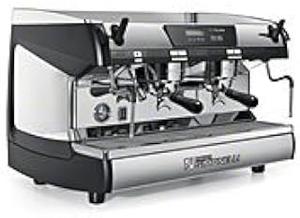 Check Price Check Price |
|
|
|
| La Marzocco Linea PBCheck Price |
|
|
|
| Franke A300Check Price |
|
|
|
| Rancilio Classe 11Check Price |
|
|
|
| WMF 1500SCheck Price |
|
|
|
Best Automatic Commercial Coffee Machines
Nuova Simonelli Aurelia II
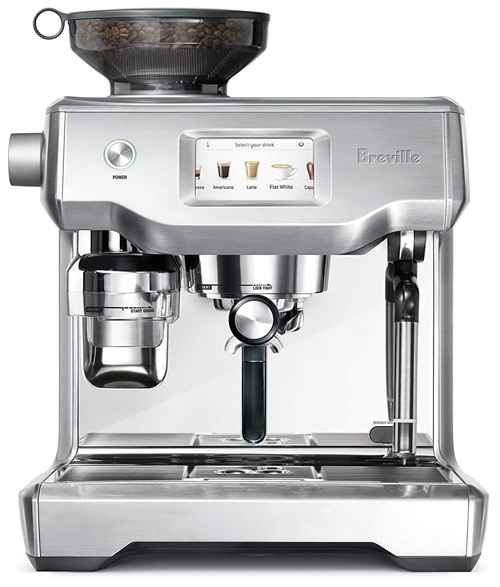
The Nuova Simonelli Aurelia II is a top-of-the-line espresso machine known for its stellar temperature consistency, making it a favorite in high-demand commercial settings. The T3 Temperature Stability System ensures that each shot of espresso is brewed at the perfect temperature, and the dual steam wands allow for fast and efficient milk frothing, which is perfect for busy environments. It’s built like a tank, designed to handle hours of use without skipping a beat. However, it’s not cheap, and its size and weight can be a bit much for smaller cafes. Plus, some of the more advanced features might require a bit of training to get the best results.
Features:
- T3 Temperature Stability System
- Automatic backflush
- Dual steam wands
- Adjustable coffee parameters
- Ergonomic design
Pros:
- Exceptional temperature consistency
- Great for high-demand settings
- Easy to use and maintain
- Efficient steaming with dual wands
Cons:
- Expensive
- Heavy and large
- Some features require additional training
La Marzocco Linea PB
The La Marzocco Linea PB is a powerhouse in the coffee world. Known for its precise temperature control and dual boiler system, this machine is designed to handle high-volume environments while ensuring every cup of espresso is perfect. The built-in PID temperature control system lets you fine-tune brewing temperatures for consistency across the day. It’s also energy efficient, which is a nice touch. However, it does come with a hefty price tag, and it’s definitely not the most compact machine out there, so it requires some real space to operate. It’s perfect for high-end cafes, but you might need a bit of training to master all its advanced features.
Features:
- Dual boiler system
- PID temperature control
- Smart water filtration
- Energy-saving mode
- Customizable pre-infusion times
Pros:
- Excellent consistency
- Dual boilers allow for simultaneous brewing and steaming
- Highly customizable
- Reliable and durable
Cons:
- Very expensive
- Requires a significant amount of counter space
- Learning curve for newbies
Franke A300
The Franke A300 is a commercial machine that brings simplicity and efficiency together in one elegant package. The touchscreen interface makes it incredibly easy to use, even for baristas with minimal experience. Its milk frothing technology is solid, and you can expect smooth, creamy lattes and cappuccinos every time. The machine is compact enough for smaller cafes, and it has a quick brew time, which is crucial during busy hours. However, some users have mentioned that the milk frothing isn’t always perfect, especially if the operator isn’t experienced, and the machine’s customization options are limited compared to higher-end models.
Features:
- Touchscreen interface
- Milk foam technology
- One-touch coffee selection
- Adjustable coffee strength
- Compact design
Pros:
- Sleek, user-friendly interface
- Consistent milk frothing
- Compact for smaller spaces
- Quick service speed
Cons:
- Milk frothing can be inconsistent with less experienced operators
- Limited customizations compared to some other models
- A bit pricey for its capabilities
Rancilio Classe 11
The Rancilio Classe 11 is designed for those who need a high-performance, reliable coffee machine in a fast-paced environment. With its multiboiler system, it ensures that every shot of espresso is brewed at the ideal temperature. The interactive touchscreen is intuitive and allows baristas to control all aspects of the brewing process. One standout feature is the automatic cleaning system, which takes a load off your maintenance team. On the flip side, it’s a pretty hefty investment and can be a bit slow to respond at times. Plus, it’s a bit on the bulky side, so you’ll need the counter space to accommodate it.
Features:
- Multiboiler system
- Interactive touchscreen display
- Automatic cleaning system
- High-quality build
- Energy-saving mode
Pros:
- Robust and durable
- Great for high-volume settings
- Automatic cleaning makes maintenance easy
- Precise temperature control
Cons:
- Expensive
- Touchscreen interface can be slow to respond at times
- Takes up more space than some competitors
WMF 1500S
The WMF 1500S is a commercial coffee machine that stands out with its combination of tech-savvy features and superb coffee quality. It’s equipped with an intuitive touchscreen, a reliable coffee grinder, and a smart milk frothing system that ensures every cappuccino or latte is perfectly frothed. One of its coolest features is the WiFi connectivity that allows you to monitor the machine remotely, making it easier to keep track of performance. However, this high-tech marvel isn’t cheap, and the setup might be a bit daunting for those not too comfortable with tech. Plus, it requires some regular maintenance to keep everything running smoothly.
Features:
- Touchscreen interface
- Adjustable coffee grinder
- Smart milk frothing system
- Energy-saving mode
- WiFi connectivity for monitoring
Pros:
- Great coffee quality
- Smart features enhance consistency
- Remote monitoring via WiFi
- Compact design
Cons:
- Quite pricey
- Requires regular maintenance
- WiFi setup can be tricky for non-tech-savvy users
Why Buy Automatic Commercial Coffee Machines
One of the primary reasons businesses invest in automatic commercial coffee machines is consistency. Customers expect the same taste, aroma, and quality every time they order a cup of coffee. Automatic machines eliminate the variability that often comes with manual brewing, ensuring that each cup meets established standards regardless of who operates the machine.
Efficiency is another critical advantage. In busy commercial settings, time is money. Automatic machines significantly reduce preparation time, allowing staff to serve more customers during peak hours without compromising quality. With streamlined processes and faster output, businesses can handle higher volumes with fewer delays.
Labor savings also play an important role. Automatic machines reduce the need for highly trained baristas, making them ideal for businesses with high staff turnover or limited training resources. Employees can quickly learn to operate the machine, freeing them to focus on customer service and other tasks.
Additionally, these machines often integrate advanced features such as programmable drink menus, self-cleaning cycles, and energy-saving modes. Over time, these features contribute to reduced operational costs, less waste, and improved workflow. For many businesses, the initial investment is offset by long-term savings and increased revenue.
How To Choose The Right Machine?
Selecting the right automatic commercial coffee machine requires careful consideration of your business needs, customer expectations, and operational constraints. The first factor to evaluate is volume capacity. A small office or boutique café may require a machine capable of producing dozens of cups per day, while a busy restaurant or hotel may need a high-capacity machine that can serve hundreds of drinks daily without downtime.
Next, consider the type of beverages you plan to offer. Some machines specialize in black coffee and espresso, while others are equipped to prepare cappuccinos, lattes, flat whites, and specialty drinks with milk foam and flavor customization. Choosing a machine that aligns with your menu ensures versatility and customer satisfaction.
Space and layout are also important. Automatic commercial coffee machines vary significantly in size. Measure your available counter space and ensure proper ventilation, water access, and electrical requirements are met. A compact machine may be ideal for smaller spaces, while larger establishments can accommodate more robust systems.
Budget is another deciding factor, but it should be evaluated alongside long-term value rather than upfront cost alone. Consider maintenance expenses, availability of spare parts, warranty coverage, and manufacturer support. Investing in a reliable, well-supported brand often proves more economical over time.
Top Features To Look For In Automatic Commercial Coffee Machines
When evaluating automatic commercial coffee machines, certain features stand out as essential for performance, convenience, and quality. One of the most important features is an integrated grinder. Freshly ground coffee beans significantly enhance flavor and aroma, and built-in grinders ensure freshness with every cup.
Programmability is another key feature. Machines with customizable settings allow businesses to adjust strength, cup size, brewing temperature, and milk ratios. This flexibility enables consistency while still offering variety to customers.
Milk frothing systems are crucial for establishments serving milk-based beverages. Automatic steam wands or integrated milk systems produce consistent foam texture and temperature, reducing the margin for error and improving drink presentation.
User-friendly interfaces, such as touchscreen displays or intuitive button controls, simplify operation and reduce training time. Clear menus and icons help staff quickly select drinks and monitor machine status.
Additional features such as self-cleaning cycles, descaling alerts, and energy-saving modes contribute to efficiency and hygiene. These functions not only extend the lifespan of the machine but also ensure compliance with food safety standards.
Tips For Using Automatic Commercial Coffee Machines
To get the most out of an automatic commercial coffee machine, proper usage practices are essential. Start by using high-quality coffee beans suited to your machine and customer preferences. Even the most advanced machine cannot compensate for poor-quality ingredients.
Regularly calibrate the machine according to manufacturer guidelines. Adjust grind size, water temperature, and extraction time as needed to maintain optimal flavor. Periodic taste testing helps ensure consistency and allows for fine-tuning.
Train staff thoroughly, even though the machines are automated. Employees should understand basic operation, troubleshooting, and daily cleaning routines. This knowledge minimizes downtime and prevents avoidable errors.
Monitor usage patterns and peak hours. Understanding demand helps you plan maintenance schedules and avoid overworking the machine, which can lead to premature wear.
Maintenance And Cleaning Tips
Proper maintenance and cleaning are critical to the performance and longevity of automatic commercial coffee machines. Daily cleaning routines should include rinsing brew groups, cleaning milk systems, and emptying drip trays and waste containers. These tasks prevent residue buildup and ensure hygienic operation.
Weekly and monthly maintenance often involves deeper cleaning procedures, such as descaling to remove mineral deposits from water lines and boilers. Hard water can significantly impact machine performance, so using water filters and adhering to descaling schedules is essential.
Always use manufacturer-approved cleaning products and follow recommended procedures. Improper chemicals or methods can damage internal components and void warranties.
Routine inspections for wear and tear, such as checking seals, gaskets, and grinder burrs, help identify issues before they escalate. Scheduling professional servicing at regular intervals further ensures reliable operation and consistent coffee quality.
Where To Buy Automatic Commercial Coffee Machines
Automatic commercial coffee machines can be purchased from a variety of sources, each offering distinct advantages. Authorized dealers and distributors are often the best choice, as they provide genuine products, manufacturer warranties, and professional installation services.
Specialty coffee equipment suppliers offer expert advice tailored to your business needs. They often provide demonstrations, training, and ongoing support, which can be invaluable for first-time buyers.
Online marketplaces offer convenience and competitive pricing, but buyers should exercise caution. Ensure the seller is reputable, the product is authentic, and after-sales support is available. Reading reviews and verifying warranty coverage is crucial when purchasing online.
Some manufacturers also offer leasing or financing options, making high-end machines more accessible to small and medium-sized businesses. These options can help manage cash flow while still benefiting from advanced equipment.
Final Words
Automatic commercial coffee machines represent a significant advancement in how businesses approach coffee service. They combine speed, consistency, and quality in a way that manual methods often cannot match. For businesses seeking to enhance customer experience while optimizing operations, these machines offer a practical and forward-thinking solution.
Investing time in understanding your needs, researching features, and selecting a reliable supplier ensures that your machine becomes a valuable asset rather than a liability. With proper use and maintenance, an automatic commercial coffee machine can serve as the backbone of your beverage service for years to come.